
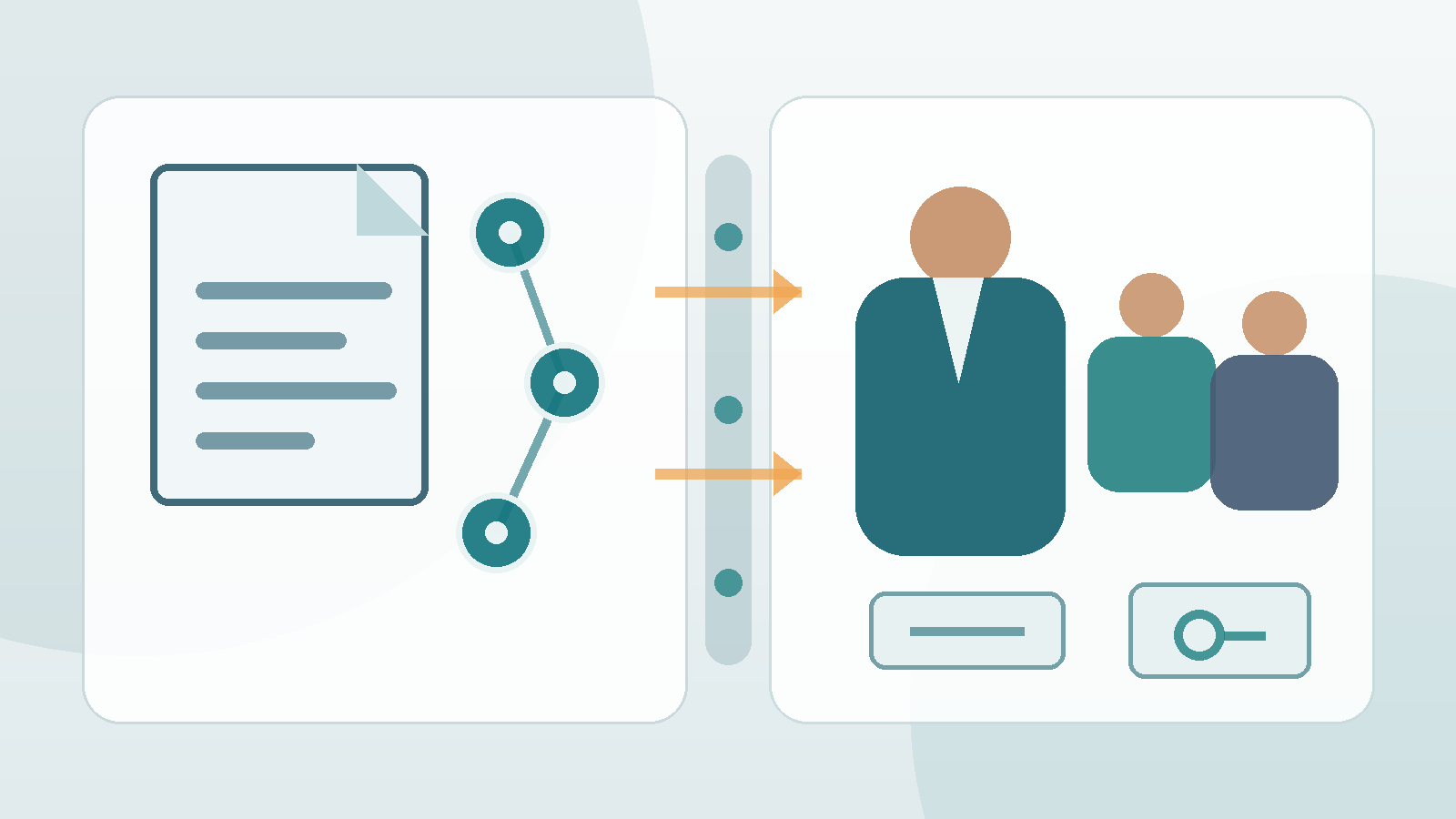
An investigator-initiated trial can give you more control over the research question. It may also place sponsor responsibilities on you or your institution—duties that an investigator does not hold merely because they lead a participating site.
The mistake is to assume that “principal investigator,” “sponsor-investigator,” and “site investigator” are interchangeable titles. They are not. “Site investigator” is useful operational shorthand; the applicable law or guidance may instead use “investigator” or, in Canada, “qualified investigator.” Before you commit to an IIT, identify the legal sponsor, the investigator responsible at each site, and the party responsible for every critical activity.
What is a sponsor-investigator?
A sponsor-investigator is an individual who both initiates and conducts a clinical trial. ICH E6(R3) states that the role carries both sponsor and investigator obligations. Under the U.S. IND regulations, the term is likewise limited to an individual who initiates and conducts the investigation and under whose immediate direction the investigational drug is administered or dispensed. The U.S. requirements applicable to that person include both sponsor and investigator requirements (21 CFR 312.3; ICH E6(R3)).
That definition is narrower than “the person who had the idea.” An investigator may originate the question while their university, hospital, or another organization becomes the legal sponsor. Conversely, an individual investigator may hold both roles when the applicable framework permits it.
This is why “investigator-initiated trial” does not complete your responsibility analysis. It describes the study’s origin and control in common use. It does not, by itself, identify the legal sponsor in every jurisdiction or for every intervention.
For the broader foundation, read What is an Investigator Initiated Trial?.
Why the distinction changes the work
In an industry-sponsored trial, the sponsor is generally responsible for trial-level functions such as investigator selection, monitoring, central safety evaluation and reporting, investigational-product supply, and trial-wide data systems. An investigator may perform assigned sponsor-supported activities, but does not become the sponsor merely by leading a site. The investigator remains responsible for participant protection and compliant conduct at that site.
Those sponsor functions do not disappear in an IIT. If an individual is the sponsor-investigator, that individual holds both sets of responsibilities. If a university, hospital, or other organization is the sponsor, the site investigator is not a sponsor-investigator merely because they originated the study. Service providers may perform transferred or delegated activities under documented arrangements, but the legal effect of that arrangement depends on the governing framework.
ICH E6(R3) states that roles and responsibilities should be documented and that sponsors and investigators retain overall responsibility for their respective transferred or delegated activities. U.S. IND regulations use more specific language for a transfer to a contract research organization (CRO): the transfer must be described in writing, the CRO becomes responsible for the obligations transferred, and the sponsor retains obligations not transferred (ICH E6(R3); 21 CFR 312.52).
The practical consequence is simple: an IIT needs more than a protocol and an ethics submission. It needs an operating model.
Sponsor and investigator responsibilities are different layers
The exact legal duties depend on the jurisdiction, intervention, regulatory pathway, and institutional structure. This comparison is a planning tool—not a substitute for local regulatory review.
| Activity | Typical sponsor layer | Typical investigator/site layer |
|---|---|---|
| Trial initiation | Takes responsibility for initiating the trial and establishes trial-level systems | Confirms the site can conduct the approved protocol |
| Qualification | Selects qualified investigators and assesses site suitability | Demonstrates qualifications, resources, facilities, and recruitment feasibility |
| Regulatory and ethics pathway | Makes and maintains sponsor submissions and authorizations where applicable | Obtains required site ethics approval and completes investigator/site reporting where applicable |
| Protocol management | Provides and controls the trial protocol and trial-level documents | Conducts the approved protocol and documents deviations |
| Safety system | Collects and evaluates safety information across sites and makes applicable aggregate/expedited reports | Provides medical care and reports site safety information to the sponsor and other bodies as required |
| Monitoring | Establishes a risk-proportionate monitoring approach and follows up significant findings | Permits monitoring, audit, and inspection and addresses site findings |
| Investigational product | Manages trial-level supply, distribution, and disposition records | Manages site receipt, storage, use/dispensing, accountability, and return or disposition |
| Data and records | Establishes data-handling, quality-management, and sponsor-record systems | Maintains accurate source/case-history records and reliable site data |
| Closeout and reporting | Coordinates applicable trial reports, site closeout, results processes, and sponsor records | Provides required reports, completes site closeout, and retains investigator/site records |
For U.S. drug investigations under an IND, the regulations assign the sponsor responsibilities including selecting qualified investigators, providing necessary information, ensuring proper monitoring and protocol/IND compliance, maintaining an effective IND, and keeping investigational-drug disposition records. FDA separately states that the investigator is responsible for compliant conduct, participant rights, safety and welfare, and control of the investigational drug at the site (21 CFR 312.50; 21 CFR 312.57; FDA investigator responsibilities).
For Canadian drug trials, Health Canada states that an institution/investigator sponsor assumes both sponsor and qualified-investigator responsibilities, including sponsor obligations at each site (Health Canada GUI-0100). That statement applies to the Canadian drug-trial framework addressed by the guidance; do not generalize it automatically to every observational study or device investigation.
Use a four-step responsibility test before launch
1. Name the legal sponsor
Start with the entity or individual identified as sponsor in the applicable submission, agreement, and institutional records.
Ask: – Is the sponsor the investigator, institution, or another organization? – Does the study involve a drug, device, biologic, procedure, records review, or another intervention? – Which jurisdictions and sites are involved? – Which regulatory and ethics pathways apply?
If those answers are unsettled, the project is not ready for activation.
2. Build an activity-level responsibility map
List critical activities across the lifecycle: regulatory submissions, ethics communications, protocol control, safety reporting, monitoring, investigational-product management, data management, statistics, vendor oversight, closeout, archiving, and results disclosure.
For each activity, record: 1. Responsible party: the sponsor, investigator, CRO/service provider, institution, or another party identified by the applicable framework and agreement. 2. Person performing the work: named team member or service provider. 3. Controlling document: protocol, agreement, procedure, or plan. 4. Evidence of completion: approval, log, report, record, or system output.
This exposes work with no owner before the gap becomes a deviation, missed report, or unusable dataset.
3. Separate delegation from accountability
You can hire a monitor, statistician, data manager, or regulatory consultant. You can assign trained staff. Do not assume that a contract or delegation log, by itself, eliminates your oversight or other retained responsibilities.
ICH E6(R3) says transferred or delegated activities require clear agreements and appropriate oversight. The investigator retains ultimate responsibility for delegated investigator activities affecting participant rights, safety, well-being, and data reliability. For a U.S. IND transfer to a CRO, also document exactly which regulatory obligations the CRO assumes under 21 CFR 312.52; obligations not specified as transferred remain with the sponsor (ICH E6(R3); 21 CFR 312.52).
Use one question: If this activity fails, who must detect the failure, assess its effect, and ensure corrective action? If the answer is unclear, the delegation is incomplete.
4. Test the operating model
A protocol can be scientifically sound and still be operationally unready.
Confirm that the accountable sponsor has the authority, time, budget, systems, and qualified support to perform or oversee the mapped work. Then confirm that each site investigator has the participant population, staff, facilities, and local controls to conduct the protocol safely and reliably.
Some promising IITs should pause here. A pause is cheaper than discovering after enrollment that no one owns monitoring, safety reconciliation, database control, or essential records.
The strongest limitation: this article cannot decide your jurisdiction
No universal table can assign every duty for every IIT. Submissions may be made by the investigator or sponsor depending on local requirements. Institutions may take the sponsor role. Product-specific regulations can add obligations. The effect of a contract also varies: ICH E6(R3) preserves overall responsibility for respective transferred or delegated activities, while 21 CFR 312.52 makes a CRO responsible for U.S. IND obligations that are specifically transferred in writing.
Use the comparison to ask better questions—not to bypass regulatory, ethics, legal, or institutional review.
Preserve the distinction at three levels: – Legal role: Who is the sponsor and who is the investigator? – Operational role: Who performs each activity? – Accountability: Who ensures adequacy and addresses failure?
Decide whether you are ready to sponsor
Investigators often assess the question, patient population, and publication potential. Those checks are necessary. They are not enough when you or your institution will sponsor the work.
Before proceeding, read Applying for an Investigator Initiated Trial and connect the responsibility map to your IIT protocol.
The decision is not whether you can write the protocol. It is whether your operating model can carry the responsibilities the protocol creates.
Frequently asked questions
Is every investigator-initiated trial a sponsor-investigator trial?
No. The legal sponsor may be the investigator, an institution, or another organization. Confirm the sponsor in the applicable regulatory and institutional documents.
Can a sponsor-investigator delegate monitoring or data management?
Yes, but define the arrangement precisely. Under ICH E6(R3), the sponsor and investigator retain overall responsibility for their respective transferred or delegated activities. Under a U.S. IND, 21 CFR 312.52 permits sponsor obligations to be transferred to a CRO in writing; the CRO assumes the specified obligations and the sponsor retains those not transferred.
Is a site investigator responsible for sponsor monitoring?
The investigator permits monitoring and addresses site findings. The sponsor is responsible for ensuring proper monitoring of the investigation, unless a specific governing framework and documented transfer assign that sponsor obligation to another party. Cooperating with monitoring is not the same as carrying trial-wide sponsor responsibility.
Take the next step
Responsibility mapping is one part of deciding whether an IIT is operationally ready. Eye-Dea to Impact provides the broader framework for moving from a promising idea to a study that can be executed and published.